
Article Directory
Let’s be honest. When the headlines flashed across our screens—Rigetti Computing reports mixed Q3 results; shares fall—the knee-jerk reaction was predictable. “Mixed results.” “Revenue misses estimates.” “Shares fall.” You can almost hear the collective, anxious sigh from Wall Street. An investor, eyes glued to the flickering red of a stock ticker, sees a 2% after-hours dip and instinctively thinks of risk.
But are we measuring the right thing? Is a quarterly revenue report, a tool designed to measure the output of established industrial machines, really the correct lens through which to view the birth of an entirely new form of computation? I don’t think so. In fact, I think focusing on a $200,000 revenue miss for a company building the foundation of our next technological age is like criticizing the Wright brothers for the low passenger-per-mile efficiency of their first flight at Kitty Hawk. It completely, utterly misses the point.
The real story isn’t about the pocket change Rigetti did or didn’t make last quarter. The real story, the one that should be sending shivers of excitement down your spine, is buried in the same report, hiding in plain sight. It’s the roadmap. And it’s a roadmap that leads to a place our classical computers can only dream of.
The Signal in the Noise
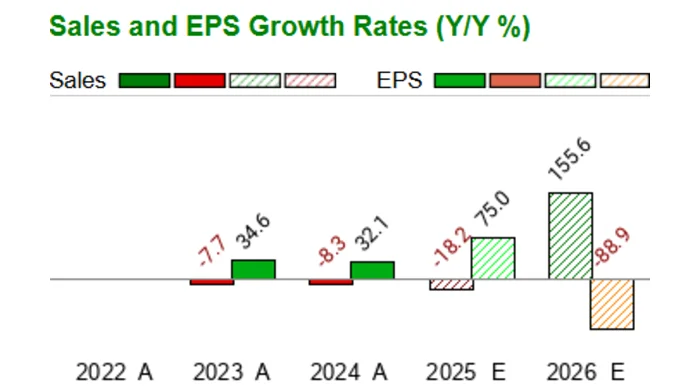
Look, the numbers are what they are. Rigetti brought in $1.9 million in revenue against a $2.17 million estimate. In the world of quarterly capitalism, that’s a miss. But for a deep-tech company like this, revenue is a lagging indicator. It’s a measure of where they’ve been. The crucial metric, the one that tells us where they’re going, is progress. And on that front, they’re hitting their marks with startling precision.
What CEO Dr. Subodh Kulkarni laid out wasn’t just a financial update; it was a declaration of intent. He confirmed they are on track to deliver a 100+ qubit system by the end of 2025. This isn’t just a number. It’s a milestone that comes with a promised 99.5% median two-qubit gate fidelity. Let me put that in simpler terms—fidelity is about reliability. It’s the difference between a calculator that gets the answer right most of the time and one you can actually trust to do your taxes. This level of fidelity is a massive step toward building quantum computers that can solve real, meaningful problems.
This is the kind of breakthrough that reminds me why I got into this field in the first place. We're not just adding more horsepower to the same old engine. We're building an entirely new kind of engine, one that runs on the fundamental, almost magical, rules of the universe. It’s a machine that uses quantum entanglement—in simpler terms, it means two particles can be linked in a way that what happens to one instantly affects the other, no matter how far apart they are. Einstein called it "spooky action at a distance," and we're about to harness that spookiness to change the world.
A Glimpse of the Quantum Horizon
The roadmap doesn’t stop in 2025. Rigetti plans to deploy a 150-plus qubit system by 2026 and then, the big one: a 1,000+ qubit system by or around 2027. The speed of this is just staggering—it means the gap between a fascinating lab experiment and a world-changing computational tool is closing faster than we can even fully comprehend. The leap from a few hundred qubits to over a thousand isn't just an incremental improvement; it’s a phase shift. It’s the difference between the first printing press, capable of producing a few Bibles, and the internet, capable of distributing the sum of human knowledge instantly.
What kinds of problems, once considered fundamentally impossible, will we be able to solve when a stable, 1,000-qubit machine comes online? We’re talking about designing new molecules for life-saving drugs in days instead of decades. Discovering new materials that could lead to near-limitless clean energy. Creating financial models that can predict and prevent economic crashes. This isn’t science fiction. This is the future Rigetti is actively building, brick by quantum brick.
Of course, with this kind of power comes an almost terrifying level of responsibility. The same tool that could design a cure for cancer could, in the wrong hands, be used to break the encryption that protects our entire global infrastructure. We have to walk into this new era with our eyes wide open, building the ethical frameworks for this technology at the same time we build the machines themselves. The challenge for us isn't just to invent the future, but to become the kind of people who are worthy of it.
So, when you see a headline about a quarterly revenue miss, I want you to see it for what it is: noise. It’s the sound of the old world trying to measure the new one with a broken ruler. The real signal is in the science, in the engineering, and in the audacious, brilliant, and deeply human quest to build a machine that can think in a way no human ever could.
They're Building the Engine, Not Selling Tickets
Let’s get one thing straight. Wall Street is playing checkers, while companies like Rigetti are playing a game that hasn’t even been invented yet. Judging them on quarterly sales is a failure of imagination. The value here isn’t in today’s balance sheet; it’s in the blueprint for tomorrow’s world. The stock might flicker, but the vision is burning brighter than ever. Don’t watch the ticker; watch the horizon.