
Article Directory
**The Space Coast's November Rocket Rush: A Data-Driven Reality Check**
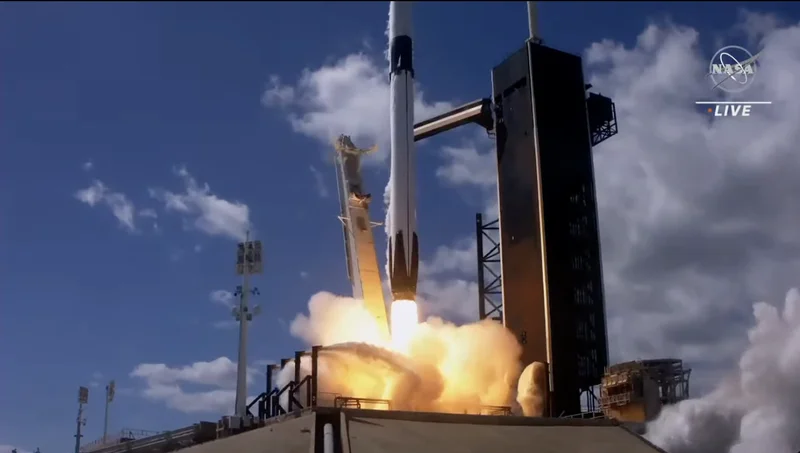
November 2025 is shaping up to be a banner month for Florida's Space Coast, with projections pointing toward a record-breaking number of orbital rocket launches. The raw numbers are impressive: 90 launches already logged by the end of October, with a schedule packed with SpaceX Starlink missions, a United Launch Alliance (ULA) Atlas V launch, and Blue Origin's second New Glenn rocket liftoff all slated for November. The question isn't if a record will be broken, but by how much. Is there a launch today? Upcoming SpaceX, Blue Origin, ULA launch schedule at Cape Canaveral
But let's pump the brakes on the enthusiasm for a second. As a former hedge fund data analyst, I've learned one thing: raw numbers rarely tell the whole story. It's not just about the quantity of launches, but the quality, the purpose, and ultimately, the economic impact.
Starlink Saturation and the Diminishing Returns of LEO
The lion's share of these launches are, unsurprisingly, SpaceX Starlink missions. We're talking about a steady stream of Falcon 9 rockets ferrying batches of 29 Starlink broadband satellites into low-Earth orbit (LEO). (To be exact, most flights carry between 22 and 29 Starlink satellites, depending on the orbital parameters of the mission.) While it's undeniably impressive from an engineering standpoint, let's consider the bigger picture.
Starlink's mission is to provide global internet access, a noble goal. But the sheer number of satellites required raises concerns about orbital congestion, potential collisions, and the long-term sustainability of LEO. Moreover, the economic benefits are not evenly distributed. Who profits most from these launches? SpaceX, naturally. And who bears the potential risks of a crowded orbital environment? Everyone.
And this is the part of the report that I find genuinely puzzling. At what point does the marginal benefit of adding more Starlink satellites diminish? Is SpaceX cannibalizing its own market by flooding LEO with bandwidth? These are questions that require far more transparency and independent analysis than we're currently seeing.
Beyond Starlink: ULA, Blue Origin, and the Promise of Diversification
Of course, not all the launches are Starlink missions. ULA is slated to launch a Viasat satellite on an Atlas V rocket, and Blue Origin is planning the second launch of its New Glenn rocket, carrying NASA's ESCAPADE spacecraft to Mars. These missions represent a welcome diversification of the launch manifest, a sign that the Space Coast isn't entirely dependent on one company and one type of payload.
The ULA launch is particularly interesting. Viasat is deploying a constellation of Ka-band communications satellites, a direct competitor to Starlink. (The ViaSat-3 constellation, when complete, should offer more than 1 Terabit per second of total network capacity.) This raises the stakes in the space-based internet race, potentially driving down prices and improving service for consumers.
Blue Origin's New Glenn launch is also noteworthy. The fact that NASA is entrusting a critical Mars mission to Blue Origin speaks volumes about the company's progress and the growing confidence in its launch capabilities. The ESCAPADE mission is designed to study the Martian magnetosphere, a crucial step in understanding the planet's climate and habitability.
But here's the rub: both ULA and Blue Origin are playing catch-up to SpaceX. SpaceX has a proven track record of reliability and cost-effectiveness, while ULA and Blue Origin are still working to establish themselves as viable alternatives. Can they compete? The data is still inconclusive.
So, What's the Real Story?
The Space Coast is undoubtedly experiencing a boom in rocket launches, and November 2025 will likely cement that trend. But it's crucial to look beyond the raw numbers and consider the underlying dynamics. The dominance of Starlink raises concerns about orbital sustainability and market saturation, while the efforts of ULA and Blue Origin to diversify the launch manifest are promising but still unproven. The Space Coast's future success depends on more than just the number of rockets that leave the launchpad. It depends on the quality of those missions, the economic benefits they generate, and the long-term sustainability of the space environment.
